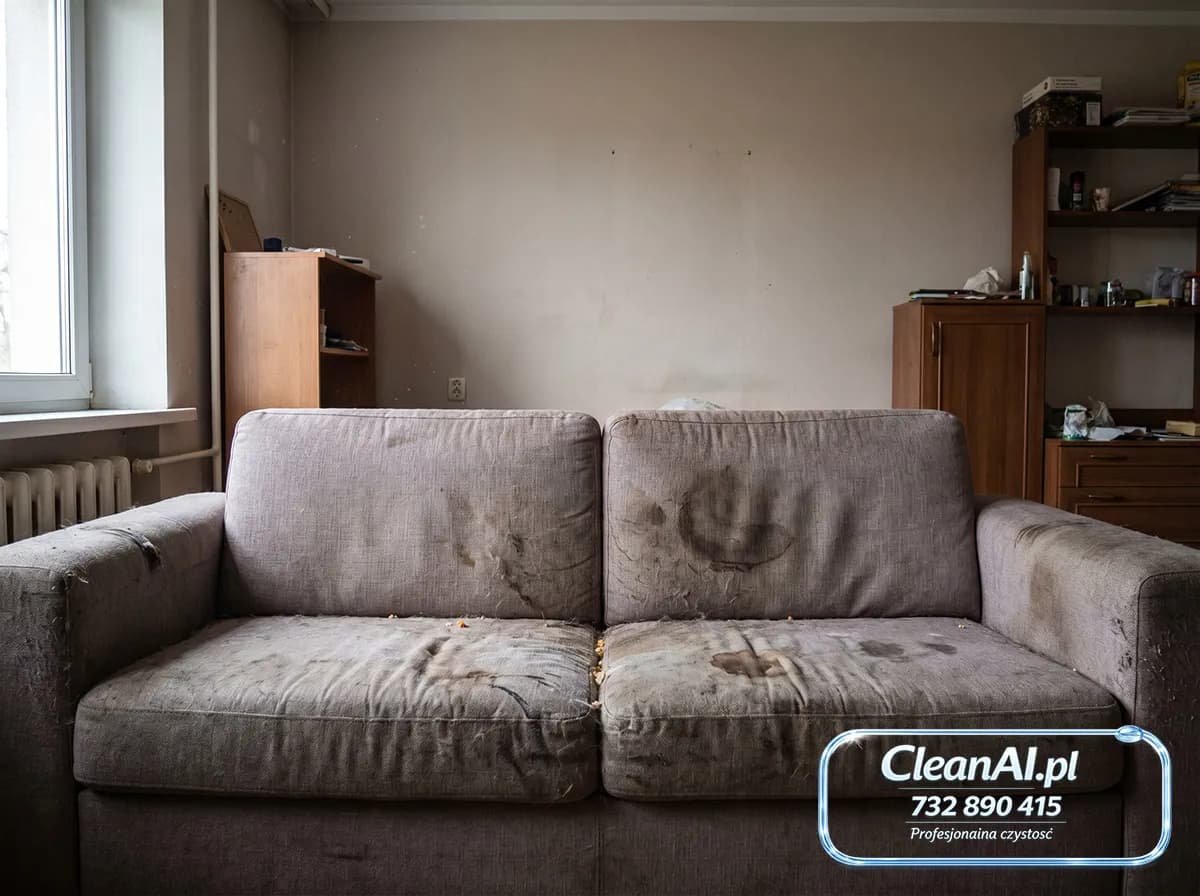
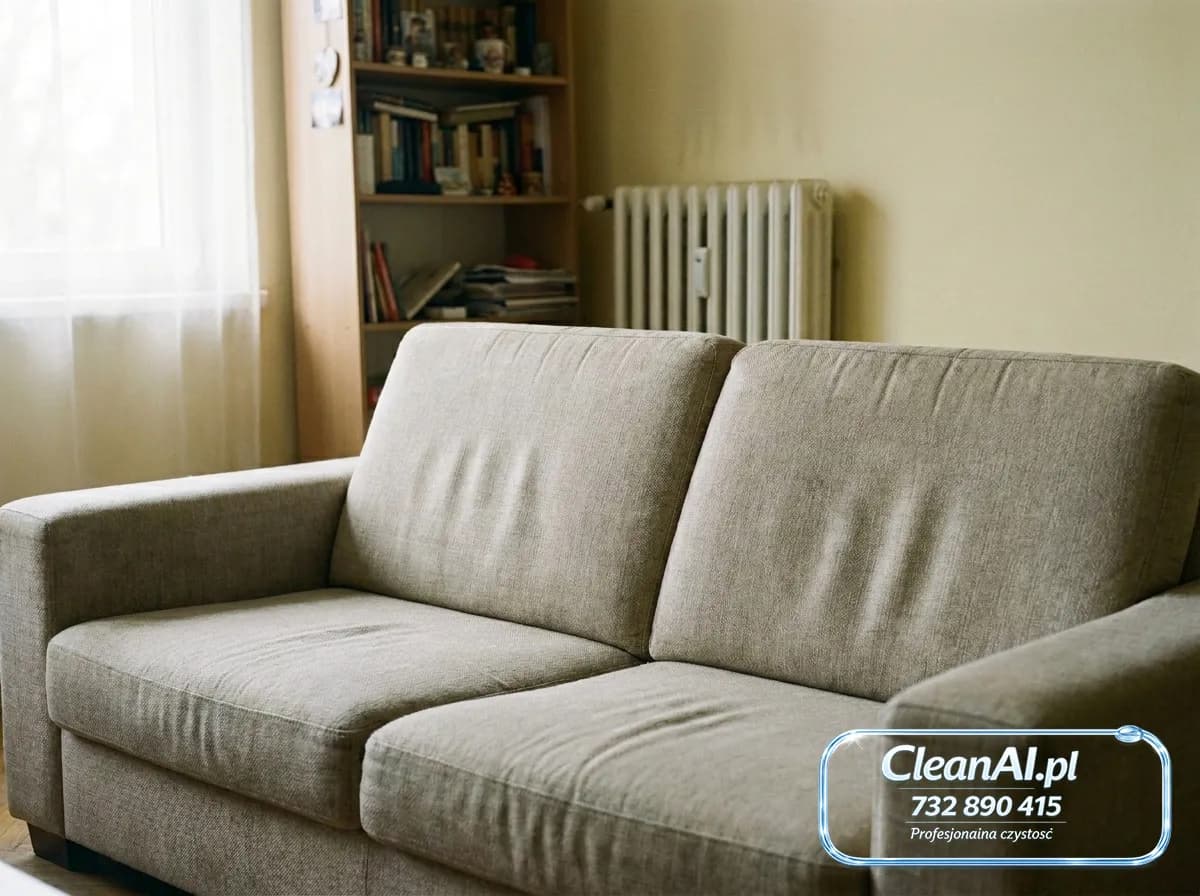
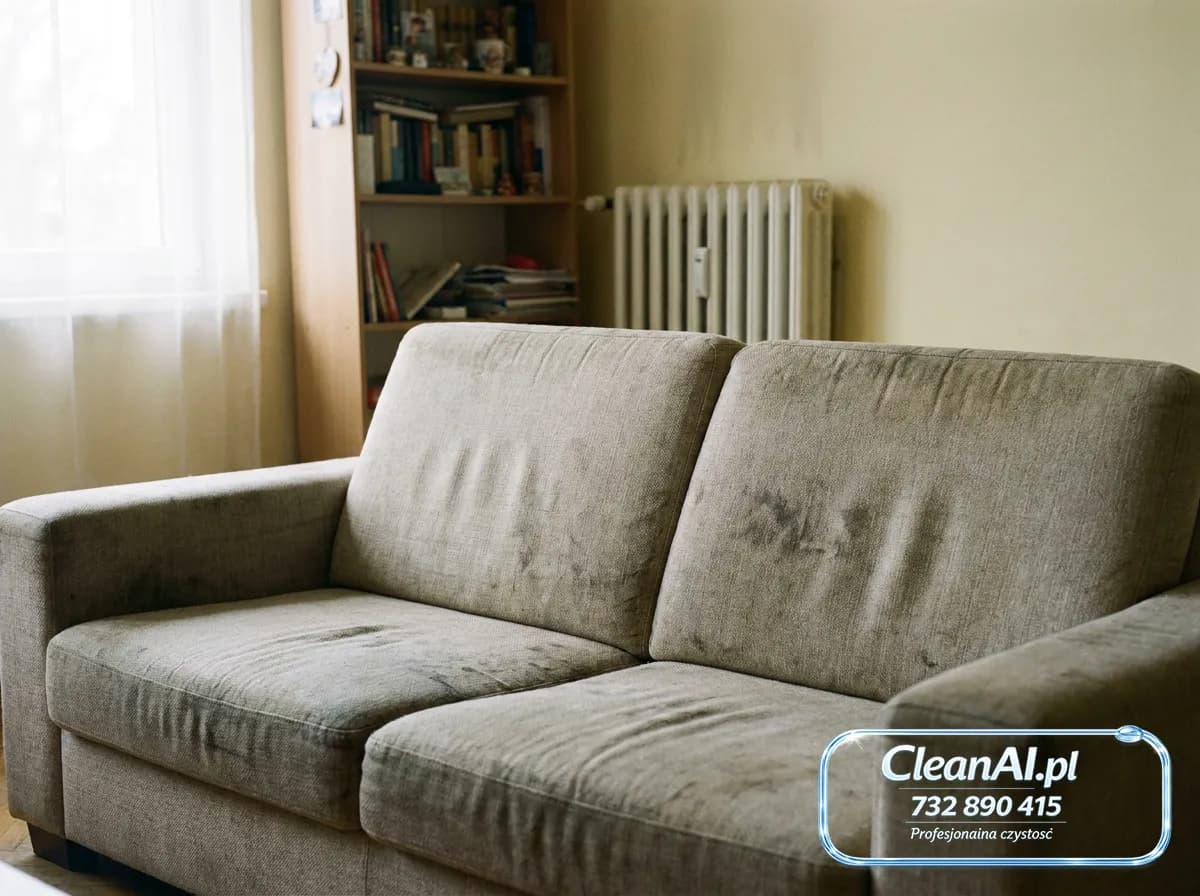
Stain removal in Krakow: what the service is
Updated:
Removing a stain in Kraków costs 30 PLN per stain at CleanAI, and cleaning the whole item so that no ring mark is left costs 60 PLN. The minimum visit is 120 PLN, travel within Kraków and products are included, and you pay after the service.
Stain removal prices in Krakow
- Spot treatment of one stain
- 30 zł
- Every next stain on the same item
- 30 zł
- Cleaning the whole element (no halo)
- 60 zł
- Extra cushion cleaning
- 15 zł
- Cleaning a whole 2-seat sofa
- 165 zł
- Cleaning a synthetic carpet
- 15 zł/m²
Stain removal is spot work: the technician comes to one specific mark, not to a full clean of the furniture. We read the care label and the fabric composition, test the agent on a hidden spot, dissolve the stain with a preparation matched to its type — one works on protein, another on grease, a third on dye — and rinse it out together with the dirt using an extraction machine. Once dry, no agent is left in the fibre to attract dust, and that is the main difference from a supermarket stain remover.
We work on upholstery, mattresses, carpets, wall-to-wall carpeting, chairs and soft headboards. The treatment takes 15–25 minutes per stain and the fabric dries in 2–5 hours. The price is 30 zł per stain with a minimum visit of 120 zł, so one trip pays off when a few spots have accumulated in the flat — and they usually have, because stains rarely come alone.
We do not promise that everything will come out. Before starting we look at the mark and say plainly: this one will go completely, this one will fade to a barely visible shadow, and this one we will not touch, because the fabric has lost its dye and cleaning will change nothing. We would rather hear "leave that one" before the work than explain afterwards why the result is not what somebody imagined.
Read moreCollapse
Stain removal prices in Krakow
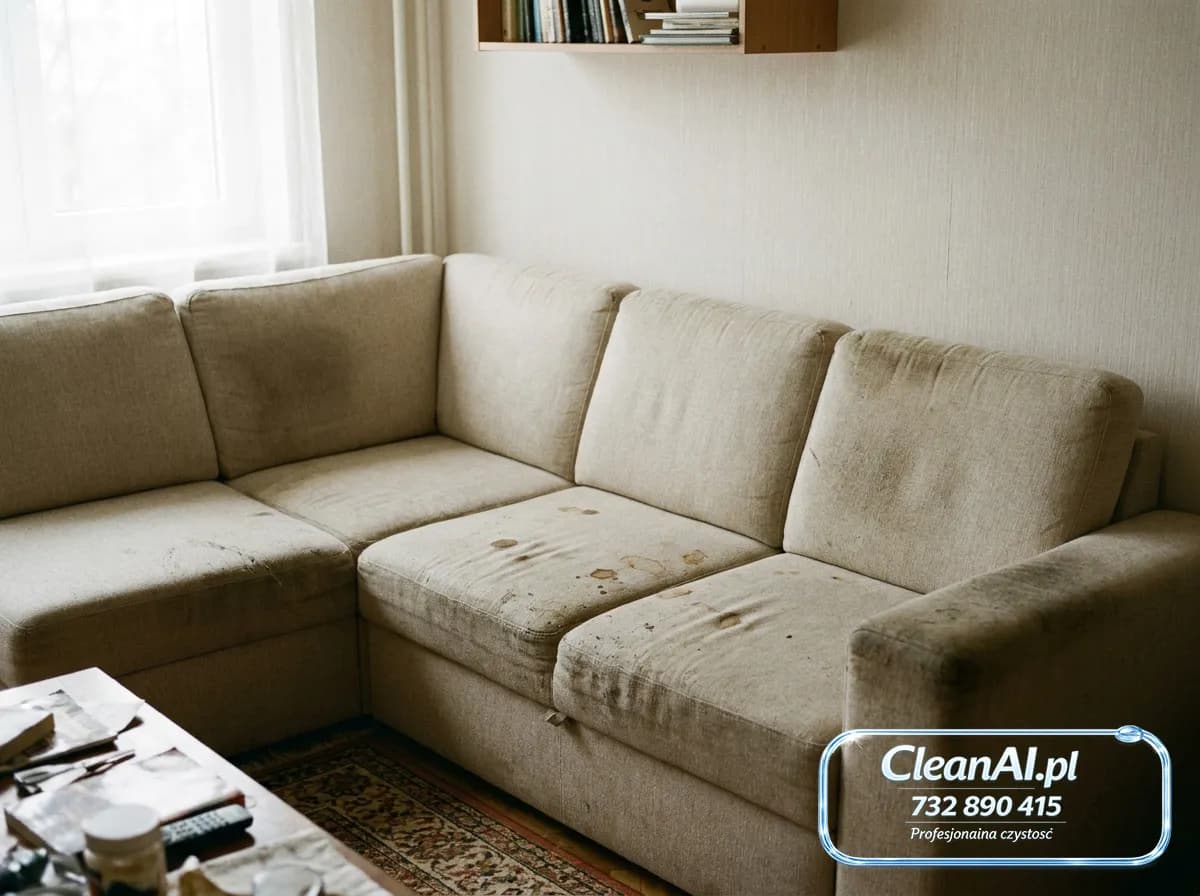
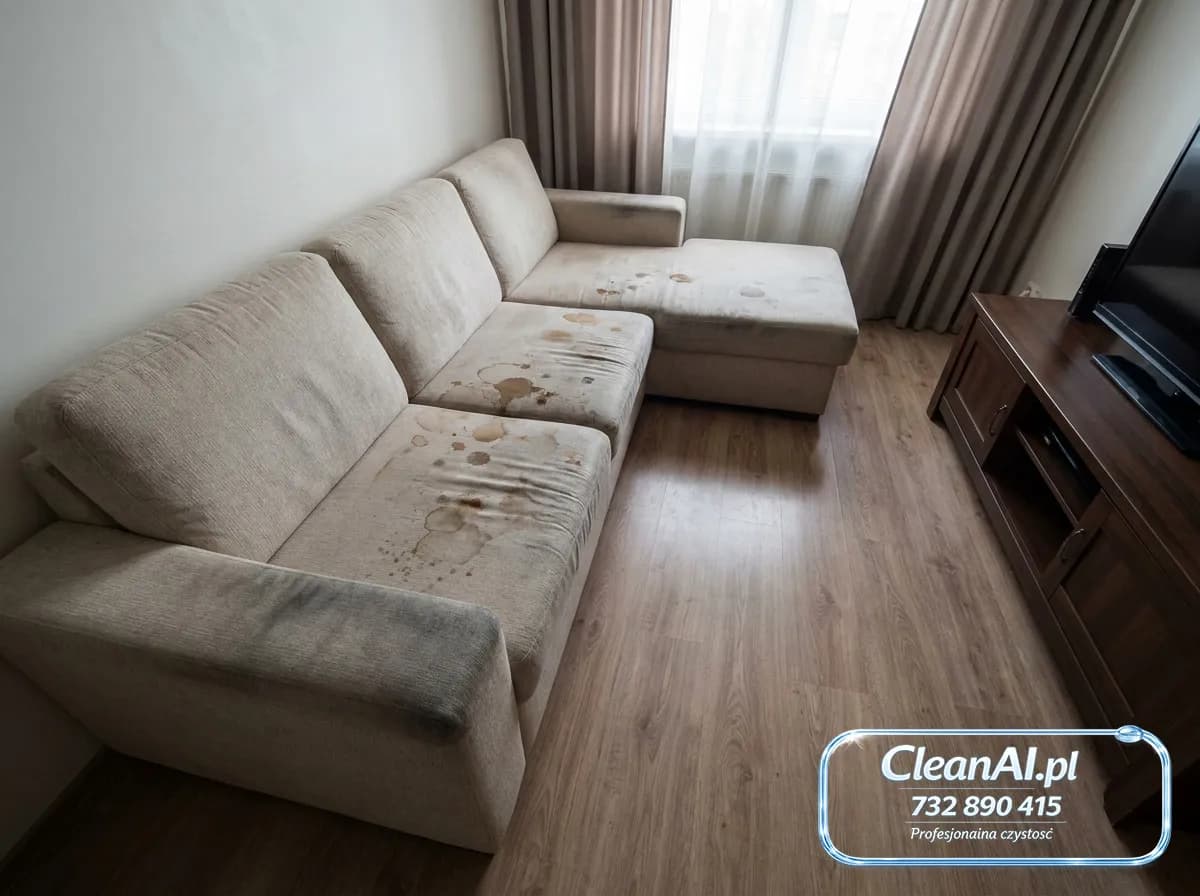
A stain is counted per piece: one mark about the size of a palm on one item. Spilled coffee that ran from the cushion down to the seat and the side of the sofa is one stain, not three. The minimum visit is 120 zł, so up to four stains in one trip fit into that amount and every next one adds its own price. Travel within Krakow is included.
| Item | Price | Time | What it covers |
|---|---|---|---|
| Spot treatment of one stain | 30 zł | 15–25 min | fabric test, agent matched to the stain type, extraction, rinsing the agent out |
| Every next stain on the same item | 30 zł | 10–20 min | same rate, no second call-out |
| Cleaning the whole element (no halo) | 60 zł | 20–30 min | add-on: the whole seat, back or side, so no lighter patch is left behind |
| Extra cushion cleaning | 15 zł | 10 min | add-on: per piece, decorative cushions with their filling; the sofa's own cushions are part of the sofa |
| Cleaning a whole 2-seat sofa | 165 zł | 60–90 min | alternative: ordered on this page in the "Add upholstery cleaning" block below, −10%; stains come out as part of the clean |
| Cleaning a synthetic carpet | 15 zł/m² | 40–70 min | alternative: ordered on this page in the "Add carpet cleaning" block below, −10%; stains come out as part of the clean |
The minimum order is 120 zł and the whole basket counts towards it. A single stain at 30 zł does not reach it: the trip, setting up the extraction machine and bringing our own water cost more than the treatment itself. You reach the minimum with other stains around the flat — on the sofa, the mattress, the carpet and the chairs — with cleaning of a whole element, or with a furniture or carpet clean in the "Add upholstery cleaning" and "Add carpet cleaning" blocks below at 10% off. Stains on the cleaned piece then come out as part of the clean, with no separate charge. The configurator adds it up live and shows how much is missing. If there are many stains scattered across one piece of furniture, we say plainly that cleaning the whole sofa in the block below works out cheaper.
What stain removal covers and what it does not
Included
- Identifying the type of stain and checking the fabric composition on the label
- Testing the agent on a hidden spot before we touch the stain itself
- Choosing the preparation: enzyme for protein, degreaser for grease, dye remover for pigments
- Spot treatment with extraction and rinsing the agent out of the fibre
- Repeating the treatment during the same visit if something is left after the first pass
- Dry vacuuming around the stain so grit is not rubbed into wet fabric
- An honest assessment before the work: what goes fully, what fades, what we do not touch
- Guidance on drying and when you can sit down again
Not included
- Cleaning the whole piece of furniture or carpet: you add it on this page in the "Add upholstery cleaning" and "Add carpet cleaning" blocks, at 10% off
- Bleach marks, chlorine damage and traces of home removers with optical brightener
- Sun fading and worn fibre: that is missing dye, not dirt
- Burns, melted fibre and cigarette holes
- Alkyd and polyurethane paint, cured adhesives after a renovation
- Natural leather and faux leather: a separate service with different agents and technique
- Stains on clothes and curtains: that is a job for a dry cleaner
What comes out and what stays
The result depends on three things: what the substance is, how long it has been sitting in the fabric and whether anybody has already tried to remove it at home. Below is the honest table — the same one the technician reads out to the client before starting.
| Type of stain | Success rate | How we do it |
|---|---|---|
| Coffee, tea, cocoa | very high | Fresh ones come out fully; after months a shadow stays on light fabric as tannins bind to the fibre. |
| Red wine | high | Dye remover and two passes; on cotton and wool a pink trace can stay after a few weeks. |
| Blood | very high | Cold water and enzyme only: warm water sets the protein and fixes the stain for good. |
| Milk, spit-up, baby food | very high | The enzyme breaks down protein and fat, extraction rinses it out; the smell goes with the stain. |
| Grease, sauce, butter, oil | high | Degreaser and two passes; old grease mixed with dust leaves a dark shadow that fades but rarely disappears. |
| Pet and baby urine | high | The enzyme breaks down the urea together with the smell; if the foam is soaked through we say so before starting. |
| Vomit | high | The same, with a longer dwell time. |
| Grass, mud, sand | high | Dry first, wet second; otherwise sand scratches the fibre and spreads the stain. |
| Chocolate, ketchup, fruit | high | Dissolved and rinsed out; dark berries sometimes leave a grey shadow. |
| Pen, marker, ink | medium | Fresh ones fade a lot, old ones stay: ink dye binds to the fibre permanently. |
| Water-based paint, fresh acrylic | medium | While it is wet it comes out; once dry it forms a film inside the weave that cannot be rinsed away. |
| Alkyd paint, glue, silicone | we do not | The solvent would destroy the fabric faster than the stain. |
| Bleach, chlorine, remover with bleach | we do not | This is not dirt but missing dye in that spot; there is nothing to rinse out. |
| Burns and melted fibre | we do not | The fibre is destroyed by heat; the only fix is a new cover or a patch. |
| Sun fading | we do not | An even loss of colour across the surface; cleaning changes nothing here. |
Tell us what has already been used on the stain at home. A remover with optical brightener leaves a lighter patch that cannot be undone, and dish soap rubbed into the fabric leaves foam in the filling — and that foam attracts dirt for months afterwards. Knowing the history of the stain, the technician picks the right agent straight away instead of spending the first pass finding out.
Fabrics: how we clean them and how long they dry
The same preparation behaves differently on velour, microfibre and wool. Below is a cheat sheet to recognise your fabric and to know what to expect from a spot treatment.
| Fabric | How to recognise it | How we clean it and drying time |
|---|---|---|
| Polyester, microfibre | Smooth, slightly rough, water beads up | Full extraction, the best success rate, dries in 2–4 h |
| Velour, velvet | Soft pile, a handprint changes the shade | Less water, brushing the pile one way afterwards, 3–5 h |
| Chenille | Thick fluffy weave, pronounced texture | Extraction at lower pressure so the pile is not matted, 4–6 h |
| Cotton, linen, natural blends | Matte, soaks up water instantly | Gentle agent, high ring risk, usually the whole element, 5–8 h |
| Wool | Soft, springy, smells of wet wool when damp | Neutral pH only, no enzymes, room temperature, 6–10 h |
| Viscose, silk, jute | Cool to the touch, glossy, stiffens when wet | By photo only and dry methods only, or not at all: water leaves permanent rings |
| Mattress | Fabric stretched over foam or springs | Spot treatment plus moisture extraction; the foam dries in 4–8 h |
| Synthetic carpet and carpeting | Polyester or polypropylene pile | Extraction with rinsing, dries in 3–6 h; with many stains cleaning it all is cheaper |
| Leather and faux leather | Smooth surface with no weave | Not touched in this service: a separate leather price list and different agents |
The care label is usually under the seat, on the underside of a cushion or on the back of the backrest. W means wet cleaning, S solvent only, WS both, X vacuuming only. With S and X a wet spot treatment is out, and we say so on the phone before we set off — so nobody pays for a trip to a fabric that must not be wetted.
Spot treatment, cleaning the whole piece or a home stain remover
Three realistic options for one wine stain on a three-seat microfibre sofa. The numbers are ours and the time is the time you actually lose.
| Criterion | Spot treatment | Cleaning the whole sofa | Home stain remover |
|---|---|---|---|
| Price | 30 zł per stain, minimum 120 zł | 182 zł for a 3-seat sofa | 20–40 zł per bottle |
| Your time | 0, you just open the door | 0, you just open the door | an hour of scrubbing plus learning by your own mistakes |
| Halo risk | real, which is why we offer the whole element for 60 zł | none, the whole piece dries evenly | high: the water ring stays for good |
| On an old stain | depends on the type, we say before the work | the same as spot work, only across the whole piece | low, usually spreads the stain wider |
| The rest of the piece | stays as it was, with stains you did not book | the whole piece clean and even in colour | stays as it was |
| Agent in the fibre | rinsed out by the extractor | rinsed out by the extractor | stays: foam in the filling attracts dust |
| When it pays off | 1–4 stains in different places around the flat | from five stains, or when the piece is generally soiled | a fresh spill wiped within a minute with a clean cloth |
When it is worth calling somebody out to a stain
Straight away, if the stain is fresh and large. The first day is the best moment: the substance is still on the fibre rather than in it and comes out fully almost every time. Before we arrive, blot up the excess with a clean white cloth, working from the edge towards the middle and never rubbing — rubbing spreads the stain and pushes it into the filling. Do not pour water on it and do not sprinkle salt; both only make the job bigger.
When a few stains have accumulated. With a single stain the trip costs more than the work, which is why the minimum is 120 zł. Have a look around the flat before booking: a coffee mark on the armchair, a cat spray by the sofa leg, grease on a kitchen chair and mud on the hallway carpet are four items done in one visit that fit exactly into the minimum.
Before guests, before selling a piece of furniture or before handing back a rented flat. Here it is usually not about one stain but about the general state: if the piece is evenly soiled, a spot treatment leaves clean islands on a grey background and that shows more than the stain did. In that case the technician says plainly that cleaning the whole sofa is cheaper and looks better — you order it on this page in the "Add upholstery cleaning" block at 10% off, and the stains come out as part of the clean.
What to do with a stain before we arrive
- Blot up the excess with a white cloth or paper towel: from the edge inwards, pressing rather than rubbing
- Do not pour water on it — water spreads the stain and pushes it into the filling, where it is harder to reach
- Blood, milk and egg: cold water only, warm water sets the protein and fixes the stain permanently
- Put away home removers containing bleach: the lighter patch they leave cannot be brought back
- Do not dry the spot with a hairdryer or a radiator, or the soil returns to the surface as a yellow ring
- Take a photo immediately and another one an hour later: they show how the stain spreads and let us pick the agent before the trip
- After the treatment air the room and do not cover the damp spot with a blanket or throw until it is dry
Why home cleaning leaves a ring
The ring that clients call a halo appears like this: water dissolves the dirt and carries it outwards, then evaporates and leaves all the dissolved material at the edge of the wet area. The further from the centre, the slower it dries, so the ring is always at the edge and always darker than the rest. A cloth and a spray bottle produce it every single time, because they have no way of taking the water back out together with the dirt.
An extractor solves this mechanically: it injects the solution and sucks it straight back together with the soil, so no wandering water is left in the fabric. On light, smooth fabrics and on cotton the risk of a ring is still high enough that the technician offers the whole element for 60 zł — the whole seat, back or side. Then the entire surface dries evenly and there is simply no edge for the dirt to settle on.
If a ring has already formed after home cleaning, it can usually be removed: it is still dirt, only pushed to the edge. It is worse with a stain treated with a remover containing optical brightener — there is nothing left to rinse out, because the fabric dye in that spot is gone. That is why we ask about the history of the stain before the work, not after.
When spot treatment stops paying off
Spot work makes sense for one, two, four stains in different places: we do exactly what is needed and you do not pay to clean furniture that is clean apart from the mark. Above five stains on one piece the arithmetic turns against the client: five stains at 30 zł is already 165 zł, the same as cleaning a whole two-seat sofa, which also takes away the dust, pet hair and grease on the armrests. You add that clean on this page in the "Add upholstery cleaning" block, 10% cheaper, and the stains on the sofa are then part of it.
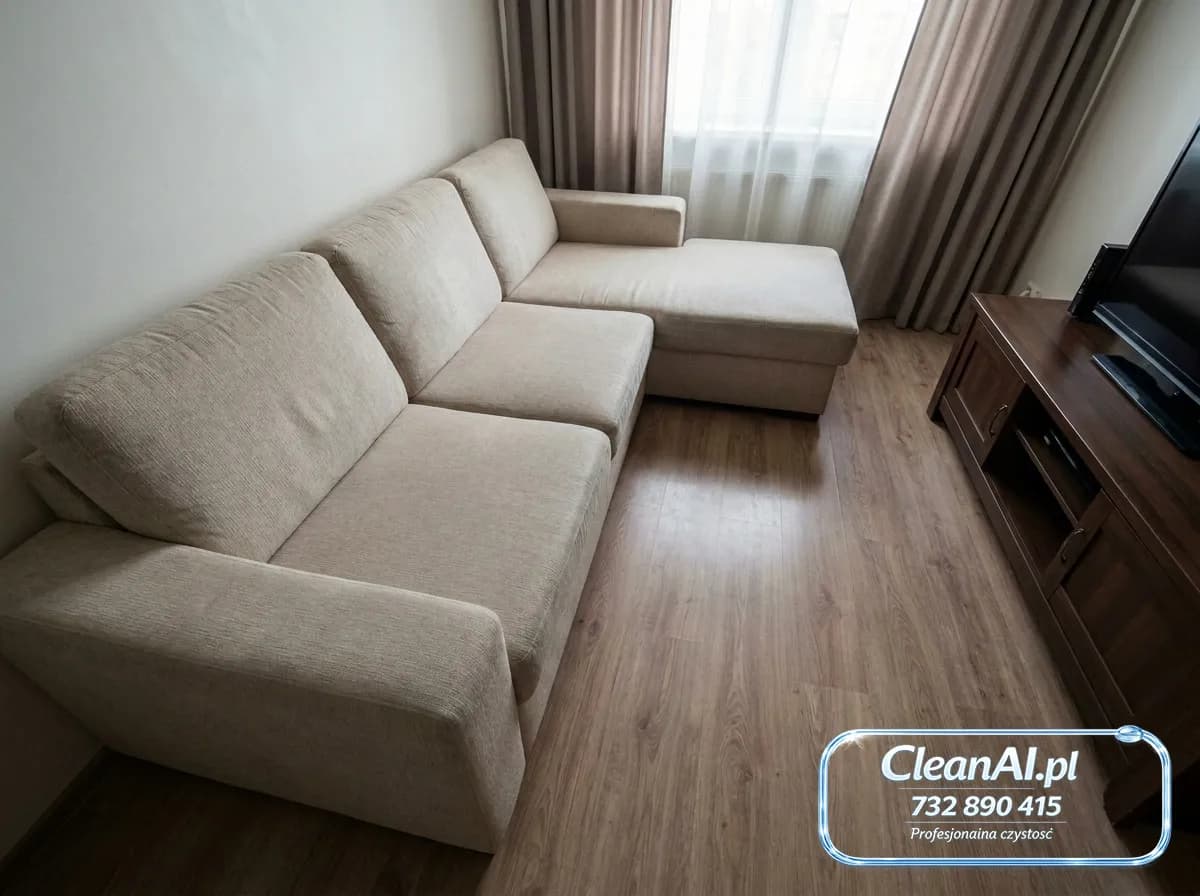
The second case is an evenly soiled piece. After a spot treatment the stain leaves a clean island noticeably lighter than the rest of the seat, and the client rightly says it shows more than before. That is why the technician looks not only at the stain but at what surrounds it. If the difference is visible, they say so before starting and offer the whole element or the whole piece.
The third case is a carpet with stains across the whole area. A synthetic carpet costs 15 zł per square metre with a minimum order of 120 zł, so with five or six stains cleaning all of it is cheaper than counting them one by one — and in the "Add carpet cleaning" block on this page you get another 10% off. That calculation is made on the spot and both numbers are always shown before the work starts.